


The latest issue of JEC Composites Magazine (No. 170, September 2026) discusses the latest advancements in CFRP recycling. This is why AC Biode was interviewed as the winner of the JEC Composites Startup Booster 2026. JEC Group is a global, non‑profit organisation dedicated to promoting composite materials and fostering their applications worldwide since 1996.
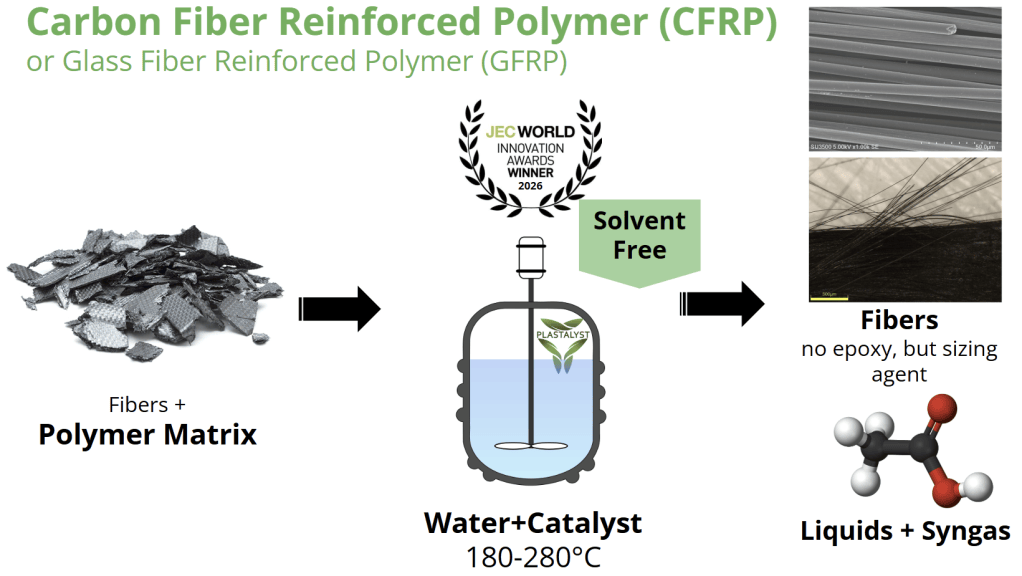
While the full technical details are in the magazine, the editorial summary makes clear that AC Biode’s approach is positioned as a low‑temperature chemolysis process designed for “some of the most challenging waste streams” in composites. The article talks about:
- Targeting hard‑to‑recycle CFRP – such as mixed scrap, contaminated manufacturing waste, and potentially end‑of‑life parts where traditional mechanical or high‑temperature pyrolysis routes struggle with quality, cost, or emissions.
- Using chemical depolymerisation at relatively mild conditions – in contrast to conventional pyrolysis (typically 450–700 °C) or aggressive solvolysis, AC Biode’s chemolysis aims to break down the resin matrix while preserving fibre length and surface integrity, which is critical for high‑performance reuse.
- Creating circular feedstocks – the process is intended to yield recovered carbon fibre (rCF) suitable for reintegration into new composites, alongside potentially valuable chemical fractions from the resin that can be upgraded into fuels, monomers, or other materials.
The JEC feature frames this as filling a “critical gap where conventional recycling technologies failed,” aligning with industry needs for lower energy use, better fibre quality, and broader waste‑stream compatibility than current commercial solutions.
Why this matters: the innovation in CFRP recycling
CFRP is widely used in aerospace, automotive, wind energy, and high‑performance sports because of its exceptional strength‑to‑weight ratio. Yet its thermoset matrices (epoxy, polyester, etc.) make it difficult to separate fibres from resin without degrading them. The main recycling pathways today are:
- Mechanical recycling – shredding/grinding CFRP into short fibres or powders for use as fillers; low cost but significant downgrading of properties.
- Thermal recycling (pyrolysis) – heating CFRP in inert or controlled atmospheres to burn off or volatilise the resin, recovering fibres; more mature commercially but energy‑intensive and can damage fibre surfaces.
- Chemical recycling (solvolysis/chemolysis) – using solvents, acids, bases, or supercritical fluids to dissolve the matrix at lower temperatures, aiming for higher fibre quality and potential resin monomer recovery; rapidly growing in R&D and early commercialisation.
AC Biode’s low‑temperature chemolysis sits in the third category but is differentiated by its claimed ability to handle complex, contaminated, or mixed CFRP streams that other chemical routes find uneconomic or technically difficult. If it can deliver:
- High fibre retention (length, strength, surface quality),
- Lower energy and emissions than pyrolysis, and
- Scalable, cost‑competitive operations,
then it becomes a key enabler for true circularity in high‑performance composites.
The future of CFRP
If technologies like AC Biode’s reach commercial maturity and are deployed at scale over the next two decades, the CFRP value chain and its environmental footprint could change dramatically.
- Dedicated rCF supply becomes mainstream
- Large carbon‑fibre producers (e.g. Toray, Teijin, Mitsubishi Chemical, SGL Carbon, Hexcel) integrate or partner with recyclers to offer virgin + recycled fibre blends as standard products.
- Specialised recyclers (e.g. AC Biode, Fairmat, Carbon Cleanup, Composite Recycling, Regen Fiber) operate regional hubs close to major CFRP users (aerospace clusters, automotive plants, wind‑blade yards).
- OEMs design for disassembly and recycling
- Aerospace (Airbus, Boeing, Lockheed Martin), automotive (BMW, Toyota, Stellantis), and wind OEMs (Vestas, Siemens Gamesa, GE) adopt design‑for‑recycling guidelines, specifying resin systems and architectures compatible with chemolysis/pyrolysis.
- Digital product passports track CFRP components from manufacture through use to end‑of‑life, enabling efficient collection and routing to appropriate recyclers.
- New intermediate materials and semi‑finished products
- Standardised rCF tapes, nonwovens, and prepregs become widely available, allowing tier‑1 suppliers to substitute 20–50% virgin fibre in many applications without redesign.
- Bio‑based or recyclable thermoset/thermoplastic matrices are paired with rCF to create fully circular composite systems.
- Waste‑stream logistics mature
- Collection networks for manufacturing scrap, end‑of‑life aircraft/automotive parts, and decommissioned wind blades become routine, supported by regulation (e.g. EU landfill bans, extended producer responsibility).
- Mobile or modular recycling units (like those from Carbon Cleanup and Composite Recycling) complement central plants, especially for remote wind farms or shipyards.
Who will benefit from CFRP recycling?
- Fibre producers: Toray, Teijin, Mitsubishi Chemical, SGL Carbon, Hexcel, Owens Corning (for hybrid glass/carbon systems).
- Recyclers and technology providers: AC Biode, Fairmat, Carbon Cleanup, Composite Recycling, Regen Fiber, and similar startups that prove robust, low‑cost processes.
- Resin and matrix suppliers: Arkema, Solvay, Syensqo, BASF, Huntsman, Aditya Birla Chemicals – especially those developing recyclable or bio‑based matrices compatible with chemolysis.
- OEMs and tier‑1 suppliers: Airbus, Boeing, Lockheed Martin; BMW, Toyota, Stellantis; Vestas, Siemens Gamesa; plus composite specialists like Gurit, Spirit AeroSystems, and regional moulders who can market lower‑carbon, recycled‑content parts.
- Waste management and logistics firms: Companies that specialise in industrial waste, decommissioning, and reverse logistics will gain new revenue streams from CFRP collection and pre‑processing.
Environmental impact at large scale
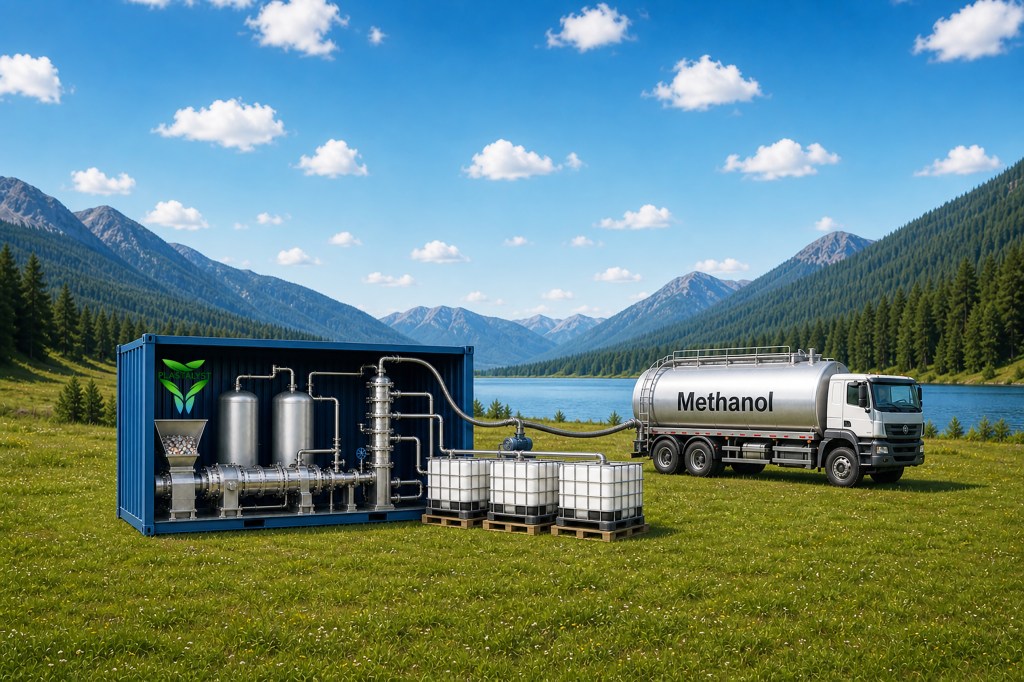
If a substantial share of CFRP waste is diverted from landfill/incineration and recycled into high‑value applications, the cumulative benefits could be significant:
- Lower embodied carbon in composites
- Recovered carbon fibre typically has a much lower carbon footprint than virgin fibre, whose production is extremely energy‑intensive. Widespread rCF use could cut the cradle‑to‑gate emissions of CFRP parts by 30–60% or more, depending on the recycling route and energy mix.
- Reduced landfill and incineration of composite waste
- Wind turbine blades, aircraft structures, and automotive parts that currently face limited end‑of‑life options would instead feed a circular loop, reducing long‑term waste volumes and associated leaching or combustion emissions.
- Lower demand for virgin fossil‑based feedstocks
- Effective chemolysis can recover not only fibres but also chemical fractions from resins that can substitute for some virgin petrochemical inputs, contributing to a more circular carbon economy.
- Enabling lighter, more efficient products with better overall LCA
- With credible recycled content and lower embodied carbon, CFRP can be used even more confidently in applications where weight savings translate directly into fuel or electricity savings (aviation, heavy trucks, wind blades), amplifying system‑wide decarbonisation.
Realising this future depends on cost‑competitive recycling, supportive policy frameworks, and continued collaboration across the value chain – exactly the kind of ecosystem that JEC aims to nurture through its events, publications, and startup programmes.
Read the full article here: https://digital-magazine.jeccomposites.com/share/article/721e903e-621e-47f7-b646-1742378c477c/8310d7a4-51ba-440b-b181-77cf8fb023ee


Leave a Reply