


Background: JEC, Airbus, and the circular‑composites ecosystem
JEC World is the largest global event for composites and advanced materials, organized by JEC Group, a long‑standing European association that brings together raw‑material suppliers, manufacturers, OEMs, and research institutes. The Startup Booster program is part of a broader push that includes initiatives such as the European Circular Composites Alliance and the RECREATE project, which aim to align over 140 organizations on common circularity roadmaps and standards.
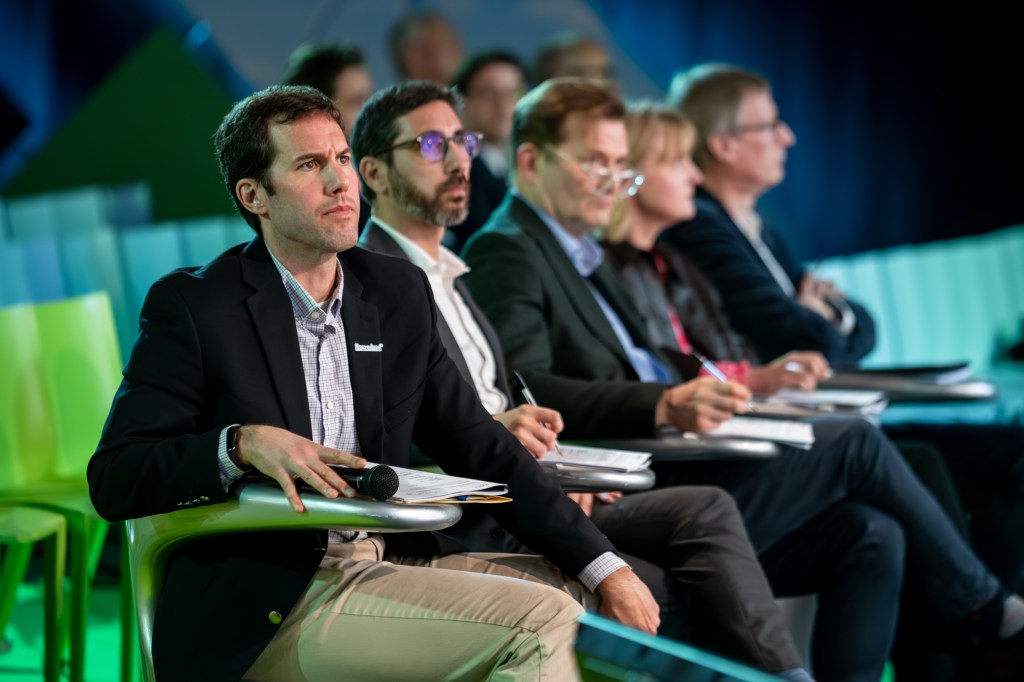
Airbus’s sponsorship of the Startup Booster Sustainability Award is no coincidence. As one of the world’s biggest consumers of CFRP‑based structures, Airbus is under growing pressure to cut end‑of‑life waste, meet carbon and resource regulations, and position itself as a technology leader in circular aviation, not just in manufacturing. By selecting Plastalyst by AC Biode as the Sustainability Award winner, Airbus is signaling that low‑pressure, low‑temperature chemical recycling is a critical piece of that strategy.

At JEC World 2026 in Paris, the composites industry made a clear statement: circularity and biomaterials are no longer niche experiments—they are at the core of the sector’s future. For AC Biode, this moment marked a turning point: our Plastalyst division won the JEC Composites Startup Booster Sustainability Award, putting our water‑based chemolysis technology at the heart of the global conversation on circular composites.
Why the Startup Booster Sustainability Award matters
The JEC Composites Startup Booster is the world’s leading startup competition in advanced materials, launched in 2017 to spotlight innovations in raw materials, processes, digital tools, and circularity. Each year, more than 1,300 projects from over 60 countries are screened, with around 20 finalists selected for the final pitch. Only three winners receive awards: the Grand Winner, the Runner‑up, and the Sustainability Award.
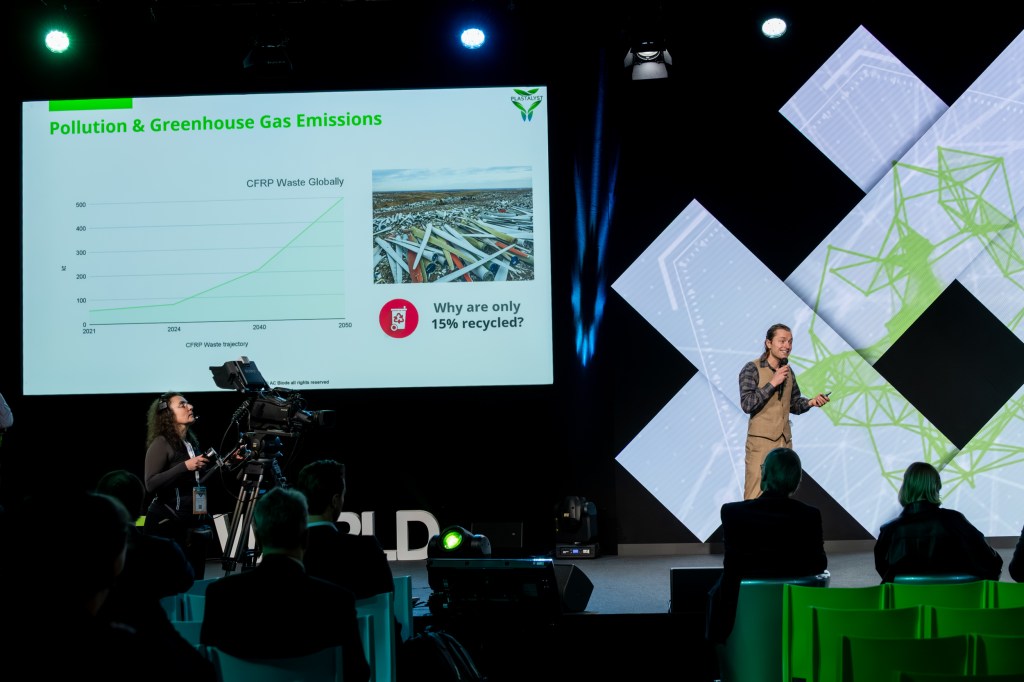
The Sustainability Award is sponsored and judged by Airbus, which underscores how seriously the aerospace and wider composites ecosystem now views environmental impact. Winners receive a financial prize, a fully equipped booth at the following year’s JEC World, and a media package on JEC’s global channels. For AC Biode, being named the 2026 Sustainability Award winner signals that our Plastalyst chemical‑recycling technology is positioned as a credible, scalable solution for circular composites, not just a promising prototype.
The exploding market for CFRP recycling
CFRP demand is rising fast, with forecasts suggesting consumption will exceed 190 kilotonnes by the early 2020s. Manufacturing scrap rates in aerospace can reach 30–40%, and end‑of‑life CFRP from aircraft, wind‑turbine blades, and lightweight electric vehicles is projected to generate millions of tons of waste annually in the coming decades if not recycled.
Circularity and CO₂ reduction: Why it’s not just “green washing”
Circular composites are not only about avoiding landfill; many nations are increasingly dependent on carbon‑fiber imports from a few concentrated producers, which exposes their manufacturing sectors to price volatility and supply‑chain risks. By building local circular‑composites loops—collecting end‑of‑life CFRP and processing it domestically—governments can secure on‑shored feedstock for aerospace, wind, and automotive industries and turn waste liabilities into strategic assets, including high‑value recycling plants and green‑jobs clusters.
How Plastalyst technology fits into the circular‑composites ecosystem
At JEC 2026, coverage highlighted that low‑temperature, low‑pressure solvolysis is emerging as a safer, cleaner alternative to high‑energy pyrolysis or aggressive chemical processes. Plastalyst extends this idea: it operates at about 200°C using water plus a proprietary catalyst, recovering fibers in a pristine state while preserving mechanical performance and enabling reuse in demanding applications.
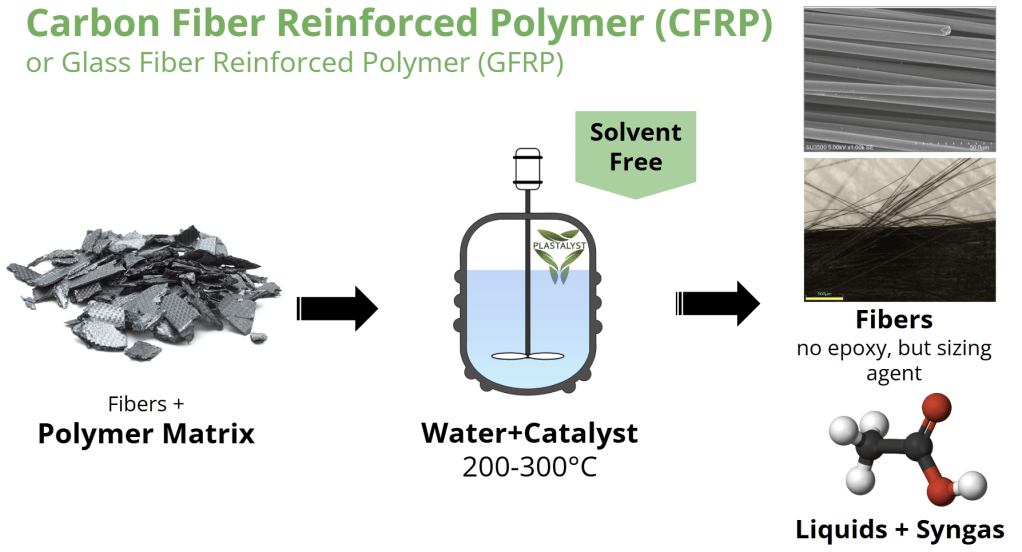
The technology can also recover the epoxy monomers for full circularity. This has already translated into pilot projects with more than 40 companies, including automotive leaders such as Toyota and Toyopet, industrial‑equipment manufacturers such as Bosch, and Daikyo Nishikawa.
Aligning with the broader biomaterials movement
While Plastalyst focuses on chemical recycling, the JEC 2026 coverage also highlights how tightly circularity is now linked with bio‑based materials. Projects using flax‑ and hemp‑reinforced structures, high‑bio‑content epoxy resins, and wood‑fiber reinforcements are moving toward higher bio‑content, lower fossil‑carbon footprints, and better design‑for‑recycling guidance.
AC Biode’s position is to complement this biomaterials push rather than compete with it. Recycled fibers can be combined with bio‑based resins and bio-based materials can be recycled using Plastalyst.
The road ahead: From pilot to industrial scale
Many circularity and biomaterials breakthroughs are still at pilot or early‑commercial scale, but the scaling momentum is accelerating fast. Winning the JEC Composites Startup Booster Sustainability Award, sponsored by Airbus, is a clear signal that safe, low‑pressure chemical recycling is a realistic route to circular composites. As the industry consolidates around circular thermosets, natural fibers, and bio‑based resins, AC Biode is committed to being the recycling engine that turns these advances into real‑world circular supply chains, from Luxembourg and Japan to the global composites ecosystem.
Read the full article here:
https://www.compositesworld.com/articles/circularity-and-biomaterials-trends-at-jec-world-2026


Leave a Reply