


We are thrilled to announce a major milestone in our mission to end plastic incineration: the publication of our latest international patent, WO 2026/110925 A1. This patent details a revolutionary method for decomposing polyols and polyol esters—the chemical building blocks of everything from everyday polyesters like PET to complex biomass like cellulose and lignin.
This isn’t just another step in chemical recycling; it is a fundamental shift in how the world treats “un-recyclable” waste.
Inside the Patent: The Science of Low-Temperature Chemolysis
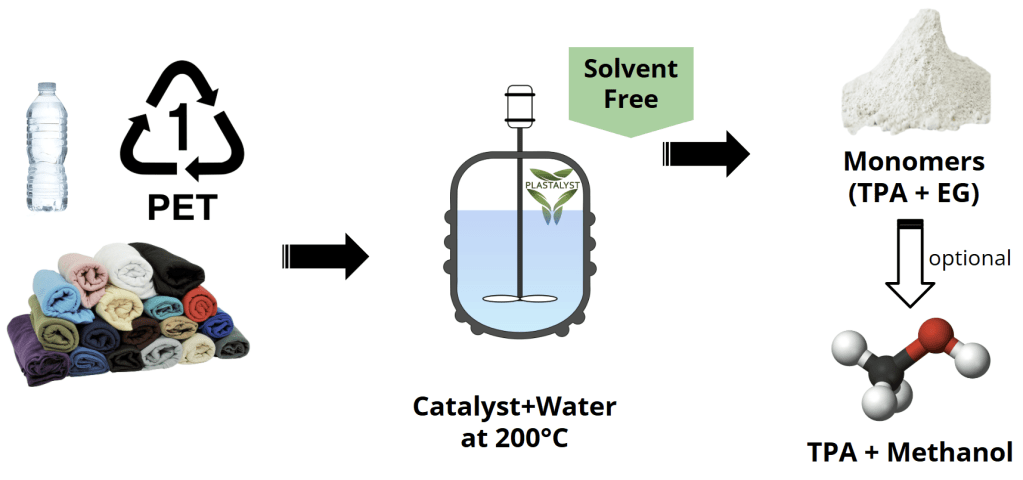
The core of our new patent is a sophisticated chemolysis process that operates at remarkably mild conditions, typically between around 200°C using only industrial water as a solvent.
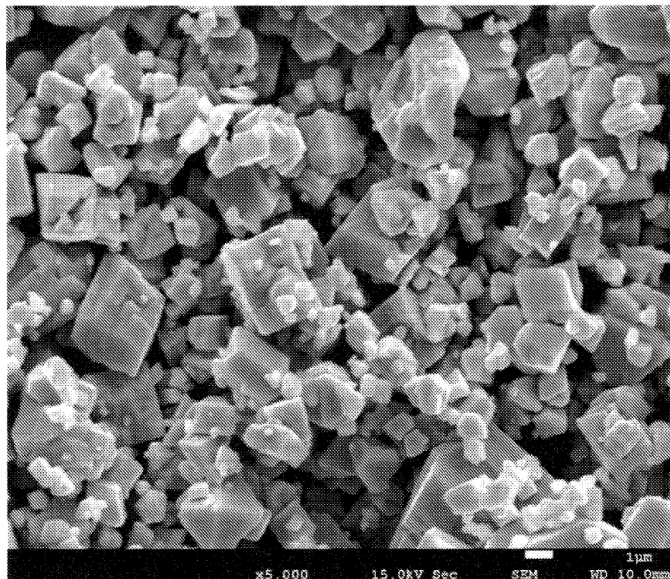
What makes this technology unique? Traditional recycling methods rely on massive external heat or harsh liquid chemicals. Our patent introduces a “solid-liquid interface” mechanism using proprietary catalysts (non-precious metal oxides and hydroxides like lead oxide or titanium dioxide).
- The Redox Secret: The breakthrough lies in selecting catalysts with a standard redox potential different from that of water. When these solids meet water, they trigger a spontaneous reaction that creates extremely acidic or alkaline environments directly at the surface of the catalyst.
- Targeted Hydrolysis: These localized “pH hotspots” allow us to efficiently break down the strong C-C and C-O bonds of polymers without needing to heat the entire bulk of the water to extreme temperatures.
- Versatility: The patent validates that this process effectively decomposes PET bottles, artificial polymers like PVA, and even organic waste such as POME (palm oil mill effluent), starch, and coffee grounds.
The Engine of Bond-Breaking
Most existing chemical recycling technologies rely on catalysts that can only attack C-H bonds, which limits them to a narrow range of pure plastics. Our proprietary catalysts are fundamentally different. They are specifically engineered to attack the much stronger C-C and C-O bonds. This technical advantage is exactly why Plastalyst can successfully depolymerise “un-recyclable” materials—such as mixed PP, PE, PVC, rubber, and even textiles—while our competitors cannot.
Science at the Interface: The Redox Secret
The patent details a sophisticated mechanism that allows us to maintain low reaction temperatures (typically below 200°C). Our catalysts consist of metal oxides and hydroxides—such as lead oxide (PbO2), titanium dioxide (TiO2), and alumina (Al2O3)—carefully selected because their standard redox potential differs from that of water.
When these solid catalysts meet industrial water, they trigger a spontaneous reaction that creates localized “pH hotspots” directly at the catalyst’s surface.
- Localized Acidity/Alkalinity: This interface produces either a strongly acidic or strongly alkaline environment.
- Targeted Depolymerisation: These extreme pH environments exist only at the solid-liquid interface, allowing the catalysts to efficiently unzip polymer chains into monomers without needing to heat the entire bulk of the water to extreme, energy-intensive temperatures.
Sustainability Meets Economics
We believe that green technology must also be economically superior to scale globally. Our catalyst strategy reflects this:
- Non-Rare & Non-Precious: Unlike many competitors who rely on expensive noble metals, AC Biode utilizes non-rare earth and non-precious metal catalysts. This drastically reduces the initial investment and risk for our clients.
- Reusable and Recyclable: The catalysts are easily reusable and designed for a long functional life. When they finally reach the end of their cycle, they are easily reactivated or recycled to recover their base components, ensuring a truly zero-waste process.
- Standard Machinery: Because our catalytic reaction is so efficient at low temperatures and pressures, it can be housed in off-the-shelf industrial equipment, making it easy to scale both vertically and horizontally.
Why This Matters for the Planet
Current global recycling rates are stagnant at just 9%. Most polyester waste—including multi-layered packaging and mixed textiles—is either buried or burned, releasing massive greenhouse gas emissions.
Our patented process changes the math:
- 90% Lower Carbon Footprint: By operating at temperatures comparable to a commercial kitchen, we avoid the massive CO2 emissions of high-heat pyrolysis.
- Zero Process Emissions: The Plastalyst system produces no dioxins, tar, or process-related CO2.
- No Pre-treatment: Because we use water as a solvent, waste does not need to be dried or intensively sorted, cutting costs and conserving freshwater resources.
The Future is Circular
This patent is the engine behind our vision of a “Renewable Carbon Refinery”. By transforming heterogeneous waste into core chemicals like methanol and hydrogen, we enable industries to displace virgin fossil-based feedstocks with high-purity recycled materials.
As we scale from our current TRL 6 pilots to our first commercial plant in Chiba, Japan, this technology will empower local communities to manage their waste sustainably and profitably. The waste crisis is a trillion-dollar untapped market, and with this new patent, AC Biode is proving that a zero-waste future is technically possible and economically superior.
Are you ready to join the circular revolution?
Contact us now.


Leave a Reply